
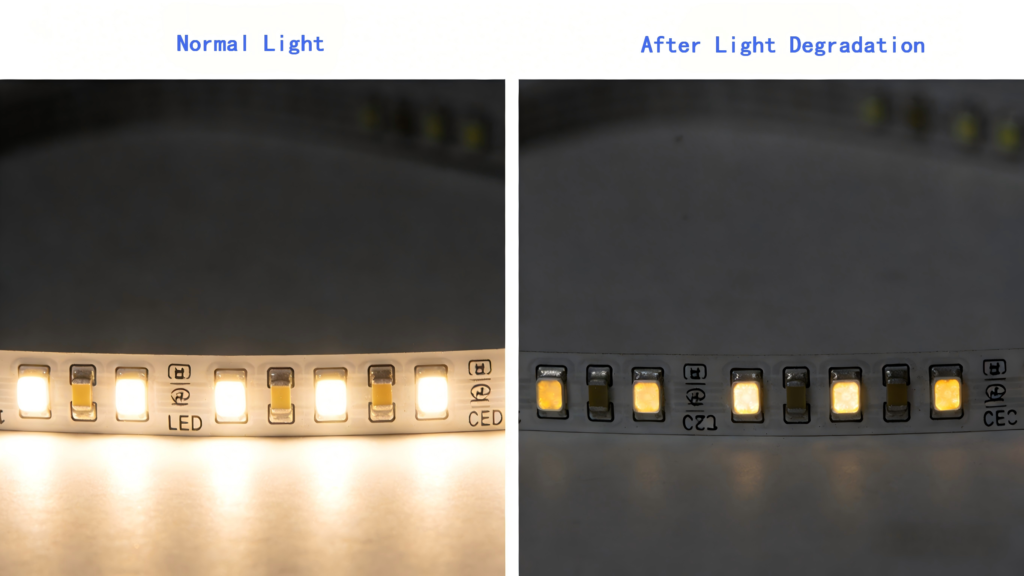
LED strip lights have become the preferred choice for home lighting, commercial spaces and decorative design due to their advantages of high flexibility, easy installation and low energy consumption. However, as usage time passes, many users find that the brightness of the strip lights gradually decreases—a phenomenon known as light degradation. Light degradation not only impairs lighting performance but also directly affects the service life of the strip lights. A thorough understanding of the causes of light degradation and the adoption of effective preventive measures are essential to fully maximizing the performance of LED strip lights.
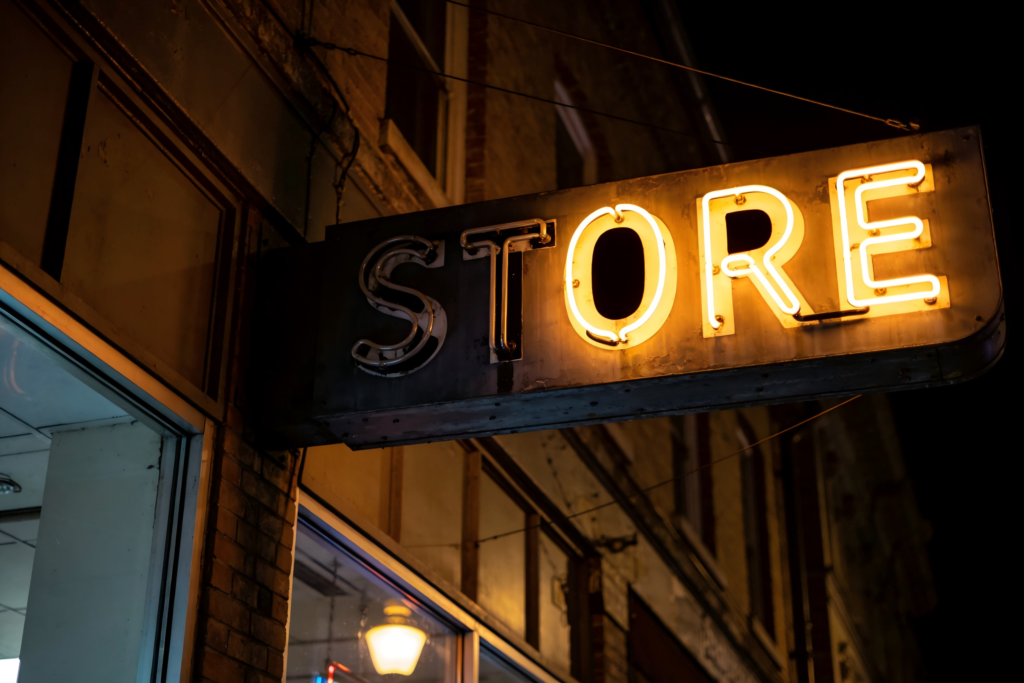
Main Causes of Light Degradation
Light degradation in LED strip lights is essentially a continuous decline in luminous efficiency, with core triggers summarized as follows:
Improper thermal management is the primary factor.
When operating, LED chips convert only part of electrical energy into light energy, while most of the remainder is converted into heat. If heat cannot be dissipated in a timely manner, the temperature of the chip PN junction rises sharply. According to the physical characteristics of LED devices, every 10°C increase in junction temperature roughly halves the service life of the strip light. For strip lights exposed to high temperatures over long periods, phosphors age rapidly and packaging materials deteriorate, resulting in a sustained drop in light output efficiency.
Overloaded drive current is a prominent issue.
Some manufacturers deliberately set the drive current above the rated value of the LEDs to make products appear brighter during display. Such “overclocking” operation keeps the LEDs in a long-term overloaded state, accelerating the migration of electrode materials and the expansion of internal defects in the chip, leading to a much faster light degradation rate than normal.
Insufficient heat dissipation in the installation environment.
Many users install strip lights directly in airtight grooves, on wood or gypsum board surfaces, or wind them into clusters during use—all practices that severely hinder heat dissipation. For high-voltage or high-density strip lights, which generate considerable heat, poor heat dissipation channels exacerbate heat buildup.
Defects in materials and manufacturing processes.
High-quality strip lights use flexible circuit boards with high-purity copper foil (2oz or above), delivering excellent thermal and electrical conductivity. By contrast, inferior products mostly use copper-clad aluminum or thin copper substrates, which have high internal resistance and excessive heat generation. In addition, LEDs packaged with low-grade phosphors or non-pure gold wires are highly prone to oxidation and failure under high-temperature conditions.
Key Measures for Scientific Prevention
In response to the above issues, light degradation can be systematically prevented through three stages: selection, installation and use.
Prioritize quality control during selection.
Give preference to reputable brands offering 3–5 year warranties. For high-power applications, choose strip lights on aluminum or copper substrates, whose heat dissipation performance is far superior to standard flexible PCBs. If flexible strip lights are required, focus on copper foil thickness—2oz or above is recommended. Meanwhile, select an appropriate power rating based on actual illumination needs, avoiding the blind pursuit of excessive brightness.
Focus on heat dissipation during installation.
Embedding strip lights in aluminum alloy profiles is the most effective heat dissipation solution; aluminum channels act as heat sinks while diffusing light evenly through a soft light cover. During installation, ensure the strip lights are laid flat and unfolded, avoid folding or stacking, and leave sufficient space for air circulation. In enclosed environments, low-voltage strip lights are recommended, with good thermal contact between the aluminum channel and the wall.
Ensure matched driving during use.
Constant-voltage strip lights must be paired with appropriately voltage-matched power supplies, where the rated power of the power supply should be 1.2 to 1.5 times the total power of the strip lights to prevent increased current ripple caused by insufficient power supply capacity. For dimmable systems, avoid long-term full-load operation; reducing brightness by 10% to 20% can exponentially extend the service life.
Conclusion
In essence, light degradation of LED strip lights is fundamentally a thermal management issue. Through careful selection, standardized installation and rational use—especially with the application of aluminum heat dissipation channels—the process of light degradation can be significantly delayed, allowing strip lights to maintain stable and excellent lighting performance for several years.