
Illuminated sign installation is a systematic project involving intricate details in structure, waterproofing, electrical engineering and more. Strict control over every step ensures an aesthetically pleasing finish, safe operation and long-lasting durability. This guide outlines key points across five core stages: pre-installation preparation, safe construction, structural waterproofing, electrical compliance, and final inspection & maintenance.
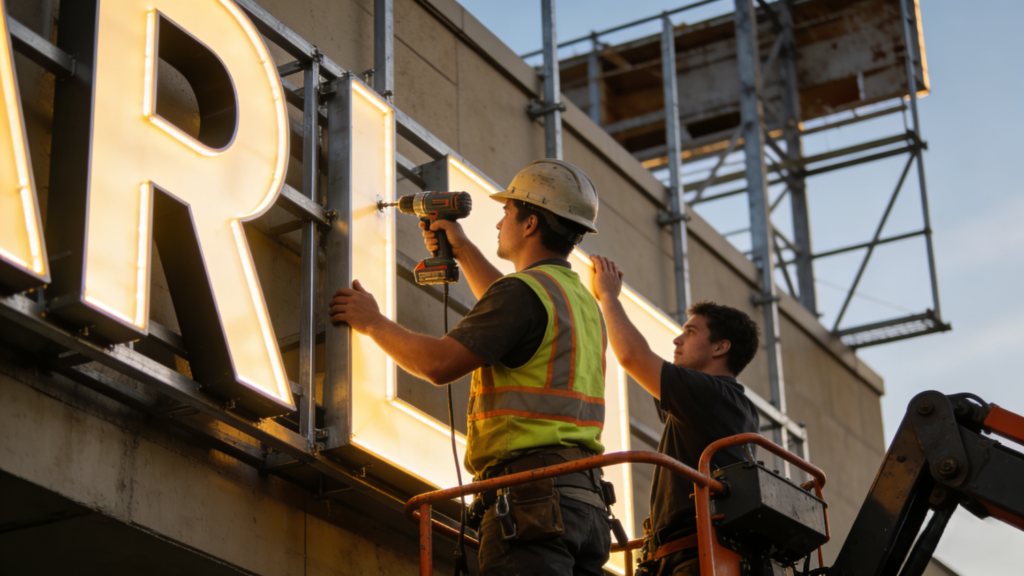
I. Pre-Installation Preparation: Survey and Approval First
Conduct on-site measurements of the installation surface to verify dimensions, inspect the load-bearing capacity and flatness of walls or curtain walls, and confirm structural stability. It is recommended to print a 1:1 template of the sign, affix it to the installation area to review the layout effect.
Urban outdoor advertisements are subject to strict approval regulations; always consult relevant authorities and complete formalities in advance to avoid forced demolition later. Prepare essential tools and materials including electric drills, levels, glass sealant, structural adhesive, copper wires and other supplies.
II. Safe Construction: Strict Protection for Aerial Work
All workers performing high-altitude operations must wear safety belts and safety ropes, and thoroughly inspect protective equipment and lifting platforms before starting work.
Brackets and screws shall be reinforced with multiple fasteners, and metal components must undergo anti-rust treatment. The quality of steel frame welding for large illuminated signs is critical, which must be operated and inspected by certified professionals.
III. Structural Waterproofing: Equal Focus on Sealing and Drainage
Seal all joints tightly with high-quality glass sealant or structural adhesive to prevent rainwater and dust from infiltrating internal circuits.
Reserve drainage holes at the bottom or edges of illuminated signs for both heat dissipation and water drainage: LED modules can reach operating temperatures of 60-80°C in enclosed spaces, and poor ventilation accelerates light attenuation. Drainage holes also remove accumulated water promptly to avoid short circuits and corrosion.
- Small signs (under 50cm in height): 1-2 drainage holes
- Medium-sized signs: minimum 1 hole per 0.5 ㎡
- Large signs: holes spaced 30-50cm apart along edges, with a hole diameter of 5-8mm
Perform a water pouring test during inspection to ensure accumulated water drains within 30 seconds.
IV. Electrical Compliance: Professional Wiring for Safety
Electrical work must be carried out by certified electricians in accordance with standards. Clearly distinguish positive and negative poles during wiring (red for positive, black for negative), and wrap all connectors tightly with waterproof tape.
The main cable distance between the switching power supply and the illuminated sign should be within 8 meters, using copper wires of 2.5 square millimeters or above. Transformers must be waterproofed and installed in distribution boxes, and the voltage adjustment knob must not be tampered with arbitrarily.
V. Inspection and Maintenance: Regular Inspections
Conduct power-on tests to check all LED modules for full illumination, flickering or color deviation. Inspect the sign for flatness and light leakage from multiple angles.
It is advised to inspect loose or aging wiring every quarter, and clean the surface regularly with neutral cleaning agents to extend the service life.
Adhering to the above guidelines effectively prevents common issues such as sign detachment, water ingress and short circuits, ensuring illuminated signs operate safely and brightly for an extended period.